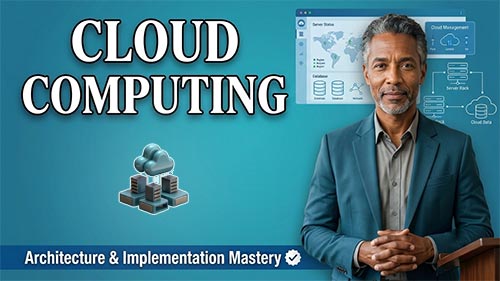
Course Name: Cloud Computing
Total Classes: 40 Classes
Per Class Duration: 2 Hours
Class Type: Online Live Class
About This Course
The Cloud Computing Professional course is designed to provide a strong foundation in cloud
computing concepts, technologies, services, and industry best practices. Whether you are a
student, IT professional, system administrator, software developer, DevOps engineer, or someone
looking to build a career in cloud technologies, this course will help you develop the knowledge
and skills required to work confidently in cloud environments.
The course covers all key aspects of cloud computing, including cloud fundamentals, cloud
service models, deployment models, virtualization, networking, storage, security, monitoring,
automation, and cost optimization. Each topic is explained in a practical and easy-to-understand
manner, allowing participants to understand how cloud technologies are used in modern
organizations.
This comprehensive training program combines theoretical knowledge with practical examples,
real-world scenarios, hands-on demonstrations, and industry best practices. Participants will gain
exposure to leading cloud platforms such as Amazon Web Services (AWS), Microsoft Azure,
and Google Cloud Platform (GCP).
The course is suitable for System Administrators, Network Engineers, DevOps Engineers,
Software Developers, Technical Support Engineers, IT Professionals, Business Professionals,
and fresh graduates interested in cloud computing. No prior cloud experience is required.
By the end of this course, participants will have a clear understanding of cloud computing
principles and will be able to deploy, manage, secure, and monitor cloud resources while
preparing for cloud certification pathways and real-world cloud roles.
What You Will Get in This Course
Cloud Computing Fundamentals (15%)
• Introduction to Cloud Computing
• Benefits of Cloud Computing
• Characteristics of Cloud Computing
• Cloud Computing Evolution
• Cloud Adoption Strategies
• Common Cloud Use Cases
Cloud Service Models and Deployment Models (15%)
• Infrastructure as a Service (IaaS)
• Platform as a Service (PaaS)
• Software as a Service (SaaS)
• Public Cloud
• Private Cloud
• Hybrid Cloud
• Multi-Cloud Environments
Cloud Infrastructure and Virtualization (15%)
• Virtual Machines (VMs)
• Hypervisors and Virtualization Concepts
• Containers and Containerization
• Serverless Computing
• Resource Provisioning
• Scalability and High Availability
Cloud Storage and Database Services (15%)
• Object Storage
• Block Storage
• File Storage
• Cloud Databases
• Backup and Recovery
• Data Lifecycle Management
Cloud Networking (15%)
• Virtual Private Cloud (VPC)
• Subnets and Routing
• Internet Gateway and NAT Gateway
• DNS Services
• Load Balancing
• Content Delivery Network (CDN)
• Network Security Fundamentals
Cloud Security and Identity Management (15%)
• Shared Responsibility Model
• Identity and Access Management (IAM)
• Authentication and Authorization
• Multi-Factor Authentication (MFA)
• Encryption at Rest and In Transit
• Security Best Practices
• Compliance and Governance
Cloud Monitoring and Automation (5%)
• Monitoring and Logging Services
• Cloud Auditing
• Infrastructure as Code (IaC)
• Terraform Fundamentals
• Cloud Automation Concepts
Cloud Cost Management and Optimization (5%)
• Cloud Pricing Models
• Cost Monitoring and Budgeting
• Resource Optimization
• Cost-Saving Strategies
• Billing and Usage Analysis
Cloud Platforms Overview (5%)
• Amazon Web Services (AWS) Fundamentals
• Microsoft Azure Fundamentals
• Google Cloud Platform (GCP) Fundamentals
• Comparison of Major Cloud Providers
• Cloud Career Paths and Certification Roadmaps